
#ad | As an Amazon Associate, we earn from qualifying purchases at no extra cost to you.
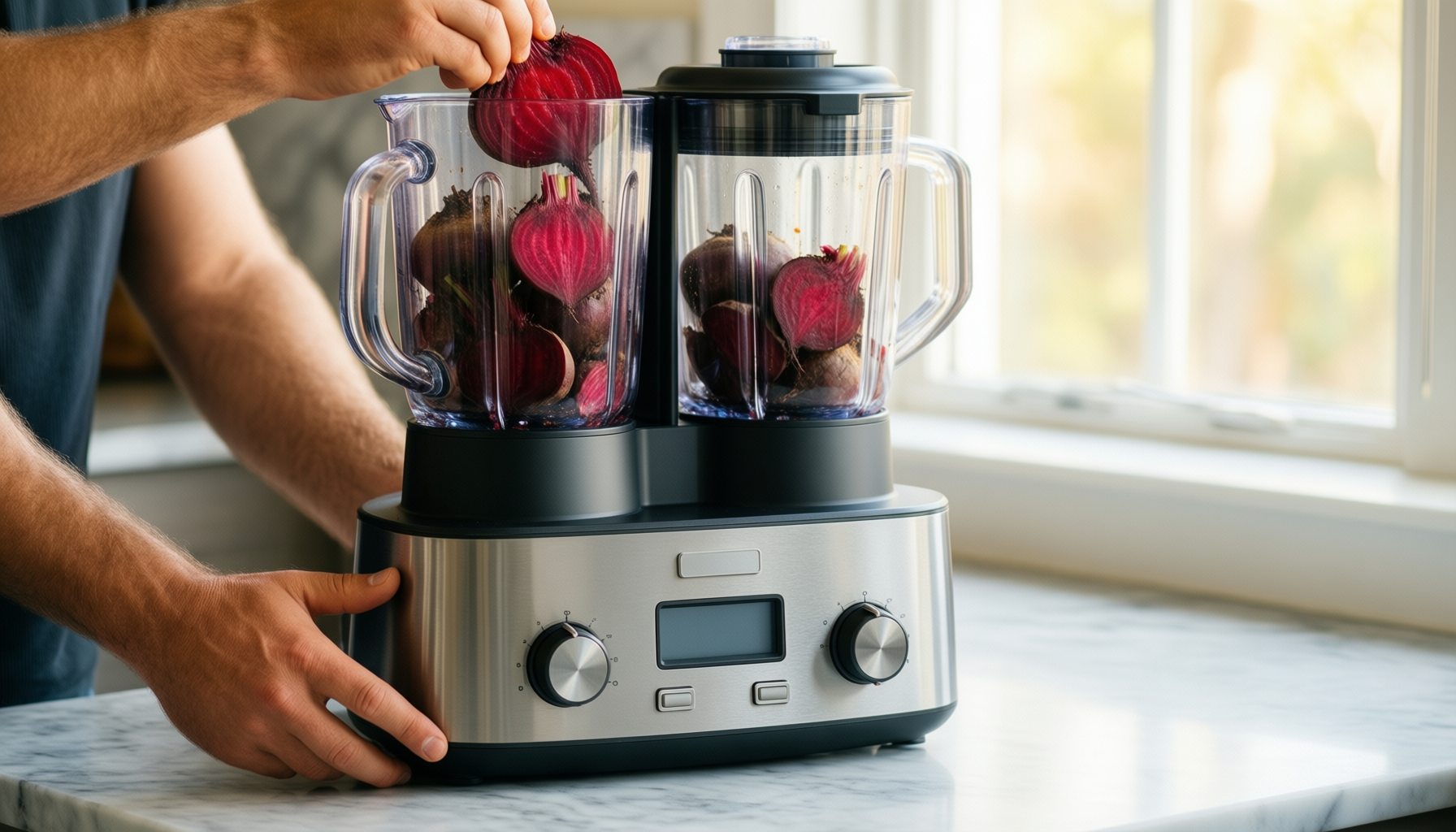
This 1500W food processor and blender combo addresses a specific kitchen bottleneck: the need to handle dense, fibrous ingredients like root vegetables and raw meat without stalling the motor. The standout feature here is the dual-vessel system, which pairs a 2.5L BPA-free plastic processor bowl with a 2L glass blender jar, allowing for distinct textural outcomes from the same base unit. However, a key limitation is the reliance on manual speed control rather than automated programs, which requires the user to actively manage the blending process to avoid over-processing. This model is best for home cooks who want to replace two separate appliances with one robust unit capable of heavy-duty tasks like kneading dough and crushing ice.
The Power Threshold for Dense Ingredients
The 1500W motor specification is not merely a marketing figure; it defines the mechanical ceiling for what this machine can handle under load. In a typical household kitchen, lower-wattage units often struggle when processing dense British staples like raw mince or tough root vegetables. When the blades encounter high-resistance materials, a weaker motor may stall or overheat, forcing the user to stop and restart the cycle. This model’s 1500W output provides the torque necessary to maintain consistent blade speed even when the bowl is filled with heavy ingredients. This consistency ensures that the chopping and grinding actions remain uniform, preventing the coarse, uneven texture that often results from a motor struggling to keep up.
🛒 Check Price on Amazon →✓ See today's price & reviews
The relationship between motor power and blade speed is critical for achieving the desired culinary outcome. The product description highlights a maximum speed of 20,000 RPM (with some specs noting 25,000 RPM), which is achieved through the high-speed gear setting. This rapid rotation is essential for tasks like blending smoothies or creating nut butters, where the goal is to break down cell walls completely. Without sufficient power to sustain this speed under load, the mixture can become grainy or separate. By maintaining a stable RPM count, the machine ensures that the friction generated by the blades is enough to emulsify ingredients into a silky consistency. This is particularly important for users who frequently prepare sauces, dips, or frozen cocktails, where texture is the primary indicator of quality.
For UK households, the 1500W rating also balances power draw with standard household circuit capabilities. While higher-wattage commercial units exist, they often require dedicated circuits or result in significant energy consumption. This unit sits in a sweet spot where it delivers heavy-duty performance without placing an excessive strain on standard domestic electrical systems. The manual control system allows users to modulate this power, ensuring that the motor is not running at full capacity when only gentle mixing is required. This efficiency extends the lifespan of the motor components, as the internal mechanisms are not constantly subjected to maximum stress. The result is a machine that feels robust and reliable, capable of handling the rigors of daily cooking without the anxiety of potential motor burnout.
Dual-Vessel Capacity and Material Choices
The inclusion of two distinct vessels is a defining characteristic of this combo unit, offering flexibility that single-jar blenders cannot match. The 2.5L food processor bowl is made from food-grade AS material, a durable plastic that is lightweight and resistant to impact. This capacity is ideal for preparing large batches of chopped vegetables, sliced cheese, or shredded ingredients for salads and side dishes. The use of plastic in the processor bowl is a practical choice, as it is less likely to shatter if dropped and is generally easier to clean than glass. The 12-cup size allows for family-sized portions, reducing the need to run the machine multiple times for a single meal.
In contrast, the 2L glass jar blender is designed for liquids and softer ingredients. Glass is a preferred material for blending hot soups or frozen smoothies because it does not absorb odors or stains as plastic can. The 70-oz capacity is sufficient for making multiple servings of smoothies or juice in one go. The distinction between the two vessels is not just about material but also about function. The glass jar is optimized for high-speed blending, where the liquid vortex helps pull ingredients into the blades. The plastic processor bowl, on the other hand, is designed for dry or semi-dry processing, where the ingredients are chopped or sliced rather than liquefied. This separation of duties ensures that each vessel is used in the environment where it performs best.
The capacity limits are also clearly defined to prevent overfilling, which can lead to poor performance or safety hazards. The processor bowl has a max liquid capacity of 1.5L, while the glass jar has a max liquid capacity of 1.5L (53 oz). These limits are crucial for users to understand, as exceeding them can cause the motor to work harder than intended or result in ingredients spilling out of the lid. The 2.5L total capacity of the processor bowl allows for a generous amount of dry ingredients, making it suitable for kneading dough or grinding meat. The 2L capacity of the glass jar is ample for most household blending needs, ensuring that users can prepare enough liquid for a family without needing to refill the jar. This dual-capacity approach provides a comprehensive solution for various cooking tasks, from dry processing to liquid blending.
Manual Control and Speed Precision
The manual control system is a key feature that distinguishes this model from many automated counterparts. Instead of relying on pre-set programs, the user has direct control over the speed and duration of the blending process. This is achieved through a three-speed setting: Pulse, Speed 1 (Chef Mode), and Speed 2 (High Speed). The Pulse mode is designed for short bursts of power, ideal for crushing ice, whole nuts, or frozen fruit. This function allows the user to break down hard ingredients without over-processing them, which is essential for maintaining the desired texture. The manual nature of this control ensures that the motor is not overstrained, as the user can stop the machine as soon as the ingredients reach the desired consistency.
Speed 1, or Chef Mode, is optimized for tasks that require precision and control. This setting is perfect for kneading dough, mincing vegetables, or slicing cheese to a controlled consistency. The lower speed allows the blades to move through the ingredients more slowly, providing a more uniform chop or slice. This is particularly useful for tasks where over-processing can lead to a mushy or inconsistent result. The manual control allows the user to adjust the speed in real-time, ensuring that the ingredients are processed to the exact texture required. This level of control is a significant advantage for home cooks who are particular about the texture of their food.
Speed 2, or High Speed, is designed for tasks that require maximum power and speed. This setting is ideal for blending meats, sauces, and dips to a silky perfection. The high speed generates a powerful vortex that pulls ingredients into the blades, ensuring a smooth and consistent blend. This setting is also useful for making nut butters or creamy almond butter, where the friction generated by the high-speed blades helps to break down the fats and proteins. The manual control allows the user to switch between speeds as needed, providing the flexibility to handle a wide range of tasks with a single machine. This versatility is a major benefit for users who want to replace multiple appliances with one unit.
Pulse Mode for Hard Ingredients
The Pulse mode is a critical feature for handling hard ingredients like ice and nuts. Unlike continuous blending, which can over-process these items into a paste, the Pulse mode delivers short, powerful bursts of energy. This allows the user to break down the ingredients gradually, maintaining control over the texture. For example, when crushing ice, the Pulse mode ensures that the ice is broken into small, manageable pieces without turning into slush. This is essential for making frozen cocktails or smoothies, where the texture of the ice is a key component of the drink. The manual control allows the user to adjust the duration of each pulse, ensuring that the ingredients are processed to the desired consistency.
Chef Mode for Precision Chopping
The Chef Mode (Speed 1) is designed for tasks that require precision and control. This setting is ideal for chopping vegetables, mincing meat, or kneading dough. The lower speed allows the blades to move through the ingredients more slowly, providing a more uniform chop or slice. This is particularly useful for tasks where over-processing can lead to a mushy or inconsistent result. For example, when mincing garlic, the Chef Mode ensures that the garlic is finely chopped without turning into a paste. This level of control is a significant advantage for home cooks who are particular about the texture of their food. The manual control allows the user to adjust the speed in real-time, ensuring that the ingredients are processed to the exact texture required.
Safety Mechanisms and Blade Design
Safety is a paramount concern in any kitchen appliance, and this model incorporates a double lock safety system to prevent accidental starts. The blender will not activate until the jug and lid are perfectly secured, creating a physical barrier between the blades and the user’s fingers. This interlocking mechanism is a critical safety feature, especially for households with children or elderly members. The ABS blade holder further protects hands during cleaning, ensuring that the user does not come into contact with the sharp edges of the blades. This level of safety engineering is a significant advantage for users who prioritize family safety in their kitchen.
The blade assembly is another key feature that contributes to the performance and safety of the machine. The commercial-grade stainless steel blades are designed to withstand rigorous blending tasks while maintaining their sharpness over time. The inclusion of multiple blade types, such as the chopping blade, dough blade, slicing blade, and shredding blade, allows for a wide range of culinary tasks. Each blade is designed for a specific function, ensuring that the ingredients are processed to the desired texture. The durability of the stainless steel blades ensures that they remain effective even after prolonged use, reducing the need for frequent replacements.
The ease of cleanup is another important aspect of this model. The one-touch button control and ergonomic grip make the machine easy to operate and handle. The BPA-free cups and glass jar are easy to clean, and the blade assembly can be removed for thorough cleaning. The ABS blade holder protects hands during cleaning, ensuring that the user does not come into contact with the sharp edges of the blades. This ease of cleanup is a significant advantage for users who want to maintain a clean and hygienic kitchen. The robust design of the machine ensures that it can withstand the rigors of daily use, providing a reliable and durable solution for home cooks.
Who Should Skip This
While this 1500W food processor and blender combo is a versatile and powerful unit, it may not be the right choice for every user. Those who require ultra-quiet operation may find the 1500W motor too loud compared to premium insulated models. In open-plan UK kitchens, the noise generated during high-speed blending can be disruptive, especially if the machine is used during early morning or late evening hours. Users who prioritize a quiet kitchen environment may prefer a lower-wattage unit with better sound insulation, even if it means sacrificing some power.
Users with limited counter space may also find this combo unit too bulky. The dual-vessel system, while versatile, takes up more space than a single-function appliance. If kitchen counter space is at a premium, a compact blender or food processor may be a more suitable option. Additionally, users who require specialized tools for professional-grade smoothies or industrial grinding may find that this unit does not meet their specific needs. The 1500W motor, while powerful, is designed for household use and may not handle the extreme demands of a commercial kitchen.
Finally, users who prefer automated programs may find the manual control system less convenient. While the manual control offers precision and flexibility, it requires more active involvement from the user. Those who prefer a hands-off approach, where the machine automatically adjusts the speed and duration based on the ingredients, may find this model less appealing. The lack of pre-set programs means that the user must have a good understanding of the machine’s capabilities and the desired texture of their ingredients. This level of control is a benefit for experienced cooks but may be a drawback for beginners or those who prefer simplicity.
Final Verdict
This 1500W food processor and blender combo is a robust and versatile unit that offers significant value for home cooks who want to replace multiple appliances with one. The dual-vessel system, with its 2.5L plastic processor bowl and 2L glass blender jar, provides the flexibility to handle a wide range of culinary tasks, from chopping and kneading to blending and juicing. The 1500W motor ensures consistent performance under load, while the manual control system offers precision and flexibility. The double lock safety system and durable stainless steel blades further enhance the machine’s reliability and safety. While it may not be the best choice for those who prioritize quiet operation or automated programs, it is an excellent option for users who want a powerful, versatile, and safe kitchen appliance.
🛒 Check Price on Amazon →✓ See today's price & reviews