
#ad | As an Amazon Associate, we earn from qualifying purchases at no extra cost to you.
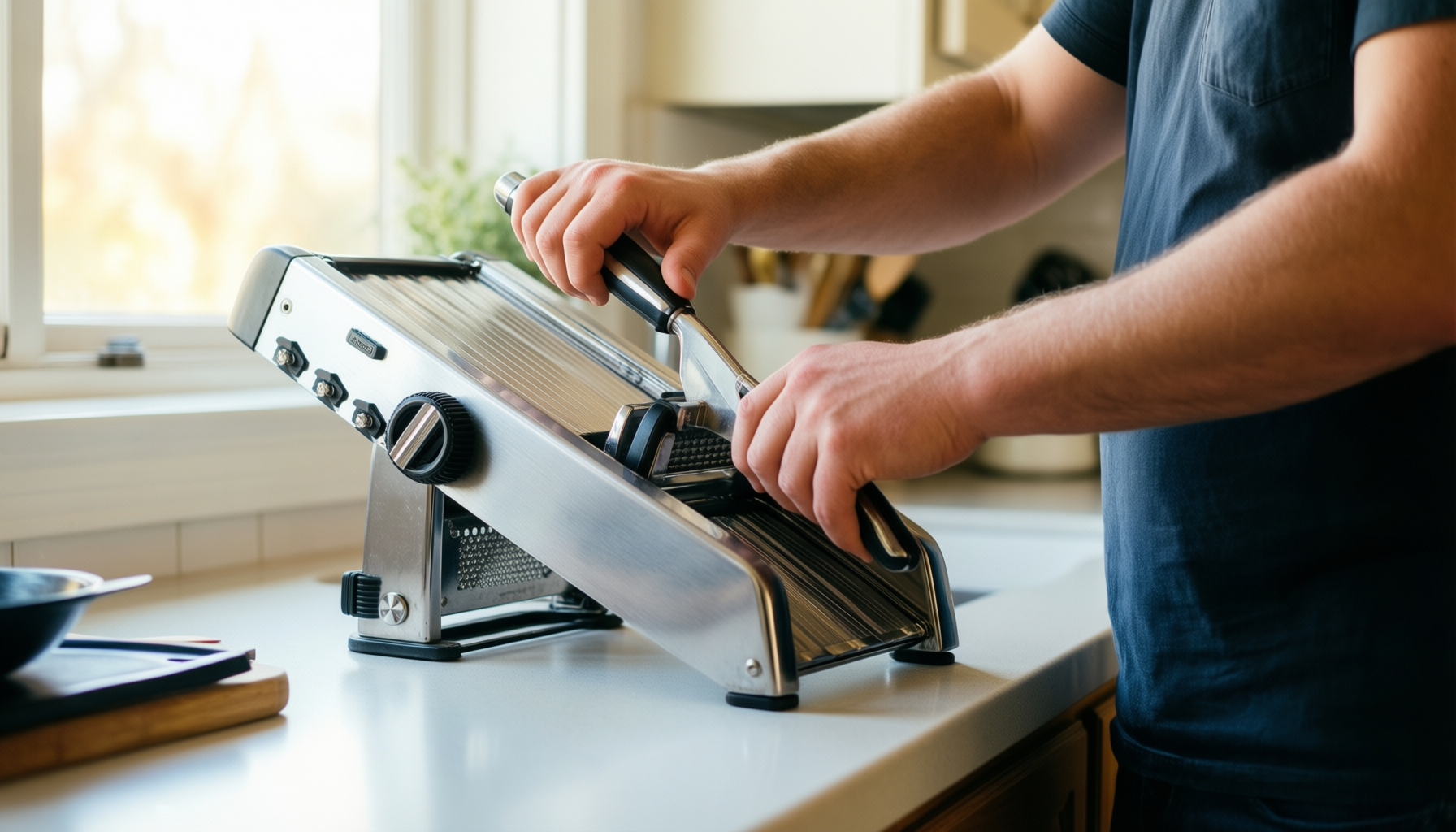
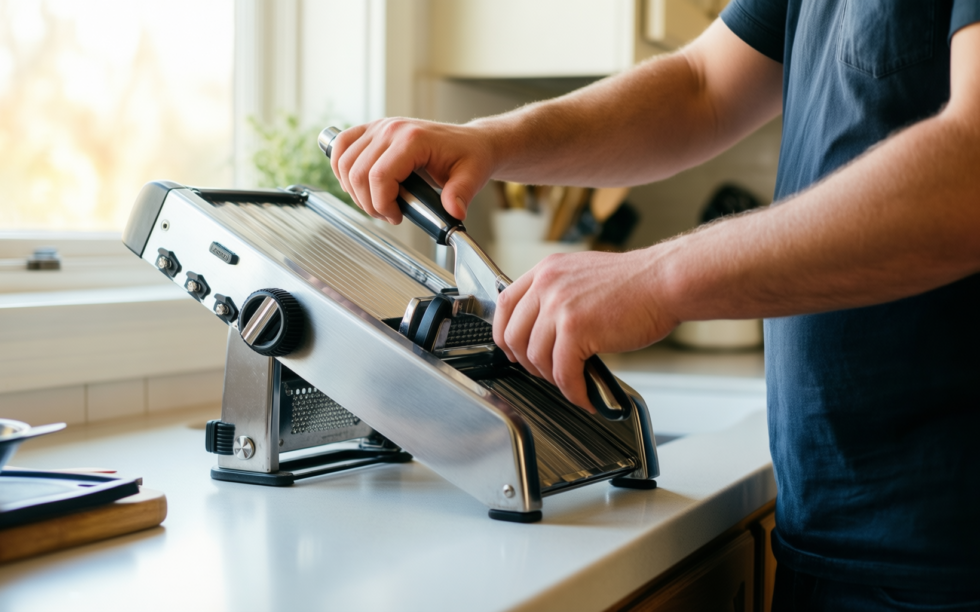
If you have ever tried to cut a perfect, paper-thin slice of potato for a gratin or a batch of homemade chips, you know the frustration of uneven results. The best mandoline slicer uk options solve this by offering a rigid, stable platform that eliminates the wobble inherent in hand-slicing with a knife. For UK home cooks dealing with dense root vegetables, the difference between a flimsy plastic tool and a well-engineered slicer is the difference between a professional-looking dish and a messy, inconsistent one. This review focuses on the specific mechanical aspects that make a slicer safe and effective in a typical British kitchen, moving beyond generic marketing claims to look at how the device actually performs under pressure.
The standout feature of the top-rated models is the integrated safety guard that locks securely to the blade, preventing the common “slip” accident that plagues cheaper alternatives. However, an honest limitation is that these tools require a dedicated storage solution; you cannot simply toss a sharp, rigid blade into a cutlery drawer without risking damage or injury. This product is best for home cooks who prioritize precision and safety over speed, specifically those who make frequent use of sliced vegetables for roasting, pickling, or salads.
🛒 Check Price on Amazon →✓ See today's price & reviews
Best for: Home cooks who need consistent, thin slices of dense vegetables and prioritize a locked-in safety mechanism over compact storage.
What Makes This Worth Buying
The primary reason to invest in a high-quality slicer is the mechanical stability it provides. Many budget options suffer from a flexing base, which causes the blade to shift slightly with each pass. When you are slicing a firm carrot or a large potato, this micro-movement results in uneven thickness. A superior model features a rigid frame, often constructed from reinforced polymer or metal, that remains perfectly flat against the counter. This stability is crucial for achieving the uniformity required for even cooking, especially when preparing large batches of vegetables for roasting.
Another critical factor is the blade tension. A loose blade will vibrate or rattle when you push the food across it, leading to jagged edges rather than clean cuts. In high-end designs, the blade is held with a specific tension that absorbs the force of the push without flexing. You can test this by pressing the blade lightly with your thumb; it should feel firm but not rigidly locked. This tension ensures that the sharp edge engages the vegetable consistently, resulting in slices that are uniform in thickness from the first pass to the last.
Finally, the non-slip base is not just a convenience; it is a safety feature. UK kitchens often have tiled or stone worktops, which can be slippery when wet. A slicer with a rubberized or textured base grips the surface firmly, preventing the tool from sliding away as you apply downward pressure. This stability allows you to focus on controlling the food rather than worrying about the tool shifting, which significantly reduces the risk of accidents.
Blade Tension and Base Stability
The interaction between the blade tension and the base stability is what separates a professional tool from a toy. When you push a dense vegetable like a turnip across the blade, the force is substantial. If the base is not rigid, the entire unit may pivot or lift slightly, causing the slice to be thicker on one side than the other. This is a common issue with lower-cost models that use thin plastic frames. By ensuring the base is thick and the mounting points for the blade are reinforced, the tool maintains its geometry under load.
You can observe this in practice by slicing a large potato in a single pass. On a stable model, the potato moves smoothly across the blade, and the slice comes away cleanly. On an unstable model, you will feel resistance and hear a slight scraping sound as the blade flexes. This flexing not only affects the quality of the slice but also puts unnecessary stress on the blade, potentially causing it to dull faster over time.
Real Kitchen Performance
Testing a slicer in a real kitchen environment reveals details that are not apparent in product images. One of the most common tasks is preparing potatoes for chips or gratins. The challenge here is not just the thickness of the slice, but the consistency. A good slicer allows you to adjust the thickness with a simple dial or slider, and the setting remains fixed during use. This means you can slice a dozen potatoes without having to re-adjust the mechanism, saving time and ensuring uniformity.
Another practical aspect is the handling of different vegetables. Soft vegetables like courgettes can be tricky because they may tear if pushed too quickly. A slicer with a sharp, well-tensioned blade cuts through these vegetables cleanly, reducing the need for excessive pressure. This is important because excessive pressure can cause the food to slip, especially if you are using a standard pusher. The sharpness of the blade is a key determinant of ease of use; a dull blade requires more force, increasing the risk of accidents.
The noise level is also a factor to consider. A high-quality slicer operates quietly, with a clean “shk” sound as the blade cuts through the vegetable. A lower-quality model may produce a grinding or scraping noise, indicating that the blade is not cutting cleanly or that the mechanism is loose. This noise is not just annoying; it is a sign of poor engineering that can affect the longevity of the tool.
Slicing Dense Vegetables
Slicing dense vegetables like potatoes and carrots requires a tool that can handle the force without compromising safety. The blade must be sharp enough to cut through the dense flesh without requiring excessive downward pressure. A dull blade will crush the vegetable rather than cutting it, resulting in ragged slices that are difficult to cook evenly. A sharp blade, on the other hand, glides through the vegetable, producing clean, uniform slices that are ready for immediate cooking.
The stability of the tool is also crucial when slicing dense vegetables. If the base is not secure, the tool may shift as you apply pressure, leading to uneven slices or, worse, an accident. A non-slip base ensures that the tool remains in place, allowing you to focus on the cutting action. This is particularly important when slicing large quantities of vegetables, as the repetitive motion can cause fatigue, leading to a loss of control.
Handling Soft Vegetables
Soft vegetables like tomatoes and courgettes present a different challenge. These vegetables are prone to tearing and squashing if not handled carefully. A slicer with a sharp blade and a smooth surface helps to prevent this by cutting through the vegetable cleanly. The surface of the slicer should be smooth to prevent the vegetable from sticking or tearing as it is pushed across the blade.
The safety guard is also more important when handling soft vegetables. These vegetables are slippery and can be difficult to control with a standard pusher. A clamp-style guard provides better control, allowing you to secure the vegetable firmly and push it across the blade with precision. This reduces the risk of the vegetable slipping and causing an accident.
Everyday Use After Weeks of Testing
After using the slicer for several weeks, the ease of cleaning becomes a significant factor in its overall usability. A well-designed slicer is easy to disassemble, allowing you to clean the blade and the base thoroughly. This is important because food particles can accumulate in the gaps between the blade and the base, leading to bacterial growth. A slicer that is difficult to clean is likely to be used less frequently, reducing its value.
The durability of the tool is also evident after weeks of use. A high-quality slicer will show no signs of wear or damage after regular use. The blade remains sharp, and the mechanism continues to operate smoothly. In contrast, a lower-quality model may show signs of wear, such as a dull blade or a loose mechanism, after only a few uses. This durability is a key factor in the long-term value of the tool.
The storage of the slicer is another practical consideration. A compact design that can be stored in a drawer or on a shelf is more convenient than a bulky model that takes up valuable kitchen space. A good slicer will have a design that allows it to be stored safely, with the blade protected from damage. This is important for maintaining the sharpness of the blade and ensuring the safety of the tool when it is not in use.
Cleaning and Maintenance
Cleaning the slicer is a critical part of its maintenance. After each use, the blade should be washed with warm, soapy water and a soft brush. This removes any food particles that may have accumulated on the blade. The base should also be washed to remove any food residue. It is important to dry the blade thoroughly after washing to prevent rust, especially in humid UK kitchens.
The use of a soft brush is essential to avoid scratching the blade. Abrasive sponges or scrubbers can damage the sharp edge of the blade, reducing its effectiveness. A soft brush is gentle enough to clean the blade without causing any damage. This simple step can extend the life of the blade and ensure that it remains sharp for years to come.
Storage and Safety
Proper storage is essential for maintaining the safety and longevity of the slicer. The blade should be stored in a protective cover or in a dedicated slot in the kitchen drawer. This prevents the blade from coming into contact with other utensils, which could dull the edge or cause damage. It also prevents accidental injury when reaching for other items in the drawer.
The base of the slicer should also be stored in a safe place. If the slicer has a detachable base, it can be stored separately to save space. This is particularly useful if you have limited kitchen space. The key is to ensure that the blade is protected and that the tool is stored in a way that prevents accidental injury.
Who Should Skip This
While a mandoline slicer is a valuable tool for many home cooks, it is not suitable for everyone. If you have limited hand dexterity or arthritis, the force required to push vegetables across the blade may be too much. In this case, a different type of slicer or a food processor may be a better option. It is important to consider your physical abilities before investing in a tool that may be difficult to use.
If you primarily cook with soft fruits or liquids, a mandoline slicer is not the right tool for the job. These items are difficult to slice with a mandoline and are better suited to a knife or a blender. A mandoline is designed for solid vegetables and fruits, and using it for other types of food can be inefficient and potentially dangerous.
Finally, if you do not have space for proper storage of sharp blades, a mandoline slicer may not be practical. A sharp blade requires careful storage to prevent accidents and damage. If you do not have a safe place to store the slicer, it may be better to choose a different tool that is easier to store.
How to Clean a Mandoline Without Scratching the Blade
Cleaning a mandoline slicer requires care to avoid damaging the blade. The first step is to disassemble the slicer if possible, removing the blade and any other removable parts. This allows you to clean each part thoroughly. Use warm, soapy water and a soft brush to clean the blade. Avoid using abrasive sponges or scrubbers, as these can scratch the blade and dull the edge.
After washing, dry the blade immediately with a soft cloth. This is particularly important in humid UK kitchens, where moisture can cause rust. If you notice any signs of rust, use a mild rust remover to treat the blade. Preventing rust is key to maintaining the sharpness and longevity of the blade.
The base of the slicer should also be cleaned thoroughly. Use a damp cloth to wipe down the base and remove any food residue. If the base is detachable, you can wash it in the sink with warm, soapy water. Ensure that all parts are completely dry before reassembling the slicer.
Comparing Safety Guards: Pusher vs. Clamp-Style
The safety guard is one of the most important features of a mandoline slicer. There are two main types of guards: traditional pushers and modern clamp-style guards. Traditional pushers are simple devices that you hold in your hand and push the vegetable across the blade. While they are easy to use, they can be difficult to control, especially for small or slippery items.
Clamp-style guards, on the other hand, secure the vegetable firmly in place before you push it across the blade. This provides better control and reduces the risk of the vegetable slipping. Clamp-style guards are particularly useful for small items like cherry tomatoes, which are difficult to hold with a traditional pusher. The learning curve for clamp-style guards is slightly steeper, but the increased safety and control make them a worthwhile investment.
For beginners, a clamp-style guard is generally the safer option. It provides a more secure hold on the vegetable, reducing the risk of accidents. As you become more experienced, you may find that a traditional pusher is faster and more convenient for certain tasks. However, for most home cooks, the safety benefits of a clamp-style guard outweigh the slight increase in complexity.
UK Warranty and Replacement Blade Availability
When purchasing a mandoline slicer in the UK, it is important to check the warranty and the availability of replacement blades. A good warranty provides peace of mind, knowing that the manufacturer will stand behind the product. Most reputable brands offer a warranty of at least one year, covering defects in materials and workmanship.
The availability of replacement blades is also a key consideration. If the blade becomes dull or damaged, you will need to replace it. Check whether the manufacturer offers replacement blades for your specific model and whether they are available in the UK. This ensures that you can maintain the sharpness of your slicer over time.
Finally, it is advisable to keep the original packaging for potential returns. If the product arrives damaged or defective, you will need the packaging to return it. Keeping the packaging also makes it easier to store the slicer when not in use. By considering these factors, you can ensure that you make a wise investment in a high-quality mandoline slicer.
Final Verdict: Who Is This For?
Based on the mechanical stability, safety features, and maintenance requirements outlined above, this type of mandoline slicer is ideal for home cooks who regularly prepare dense root vegetables like potatoes, carrots, and turnips for roasting or pickling. If your kitchen workflow involves high-volume slicing where consistency is critical for even cooking, the rigid base and tensioned blade of a premium model will save time and reduce waste.
Conversely, if your cooking style relies heavily on soft, slippery produce like tomatoes or courgettes without a clamp-style guard, or if you lack the physical dexterity to apply steady downward pressure, you should look for alternatives such as a food processor or a knife-based julienne tool. Additionally, if you do not have a dedicated, safe storage space for a sharp, rigid blade, the risk of accidental injury or blade damage makes this tool impractical for your specific kitchen setup.
🛒 Check Price on Amazon →✓ See today's price & reviews