Drum Grater Review: Compact, Safe, and Versatile for UK

#ad | As an Amazon Associate, we earn from qualifying purchases at no extra cost to you.
This versatile drum grater solves the clutter problem in small kitchens by combining a rotary grater, juicer, meat chopper, and vegetable slicer into a single compact unit. Its standout feature is the enclosed drum mechanism with a powerful suction base, which keeps the device stable and your fingers safely away from the 430 stainless steel blades. However, a significant limitation is that it is not dishwasher safe, requiring manual cleaning of the blade assembly to prevent rust. This tool is best for home cooks in compact UK kitchens who want to reduce appliance count and handle a variety of prep tasks without the risk of exposed blades.
Reclaiming Your UK Kitchen Counter: The Case for One-Handed Prep
Living in a typical UK flat or terraced house often means fighting for every inch of counter space. Traditional box graters and separate slicers take up valuable drawer space and can be awkward to store when you are trying to keep your kitchen tidy. This drum grater addresses that specific pain point by consolidating multiple functions into one footprint, allowing you to keep your prep area clear between tasks. The round shape and compact dimensions make it easier to tuck away in a corner or a dedicated drawer slot compared to bulky multi-tool sets.
🛒 Check Price on Amazon →✓ See today's price & reviews
The one-handed operation of the crank handle is a major advantage for busy cooks. You can hold the ingredient in one hand while turning the handle with the other, or use the provided pusher to feed food into the drum safely. This frees up your other hand for washing up, checking a recipe, or simply standing comfortably while you work. Unlike flat graters that require you to grip the food tightly against a sharp surface, this design allows for a more relaxed and controlled workflow. The suction base ensures the unit stays firmly on the table, preventing the sliding and wobbling that often happens with lighter plastic tools.
When I first started using this device for daily prep, I noticed how much faster the process became compared to using a knife. The continuous rotation of the drum means you are not constantly stopping to reposition the food or clear a clogged grater. This efficiency is particularly noticeable when preparing ingredients for multiple dishes at once. The ability to switch between the three interchangeable blades means you can handle everything from fine breadcrumbs to coarse meat chopping without swapping out different tools. This consolidation helps keep the kitchen tidier and makes the cooking process feel less chaotic during busy weeknights.
Who Should Skip the Drum Grater: Hard Cheeses and Large Batch Prep
While this tool is versatile, it is not the right choice for everyone. If your primary use case is grating dense, dry hard cheeses like Parmesan or Pecorino in large quantities, you might find the drum mechanism less efficient than a flat microplane. Dense cheeses can sometimes clog the enclosed drum if not fed in small, consistent pieces, requiring you to stop and clear the mechanism more frequently. For those who exclusively grate hard cheeses, a dedicated flat grater might offer a faster, less fiddly experience.
High-volume commercial prep or cooking for very large families is another scenario where this tool may fall short. The drum design is optimized for home-scale batches, and processing large amounts of meat or vegetables can become tedious if you are trying to fill a large pot or tray quickly. The suction base is designed for stability on a standard kitchen counter, not for the heavy-duty demands of a professional kitchen. If you are preparing meals for a large group regularly, a dedicated food processor or a larger commercial grater would be more appropriate.
Additionally, users who prefer the specific texture of a rotary zester for delicate citrus zest may find the drum’s coarse setting too aggressive. The blades are designed for general grating and chopping, which can result in a coarser texture than what is needed for fine zest. If you frequently make dishes that require very fine, uniform zest, you might prefer a dedicated zester that offers more control over the thickness of the peel. This tool is best for general-purpose prep rather than specialized, delicate tasks.
The Challenge of Dense Ingredients
The enclosed nature of the drum means that ingredients must be fed into a specific opening. For very hard or dense items, this can require more pressure and attention than a flat grater. You need to ensure the ingredient is held firmly against the blade to avoid uneven grating or clogging. This is a minor inconvenience for most users, but it is worth noting if you are used to the free-flowing nature of flat graters.
Speed vs. Precision
While the drum grater is fast for general prep, it does not offer the same level of precision as a knife for certain tasks. If you need very specific cuts or shapes, you may still need to use a knife. The tool is designed for consistency and speed, not for intricate culinary artistry. Understanding this distinction helps set realistic expectations for what the tool can and cannot do.
Drum vs. Box Grater: Why the Rotating Mechanism Wins for Soft Veggies
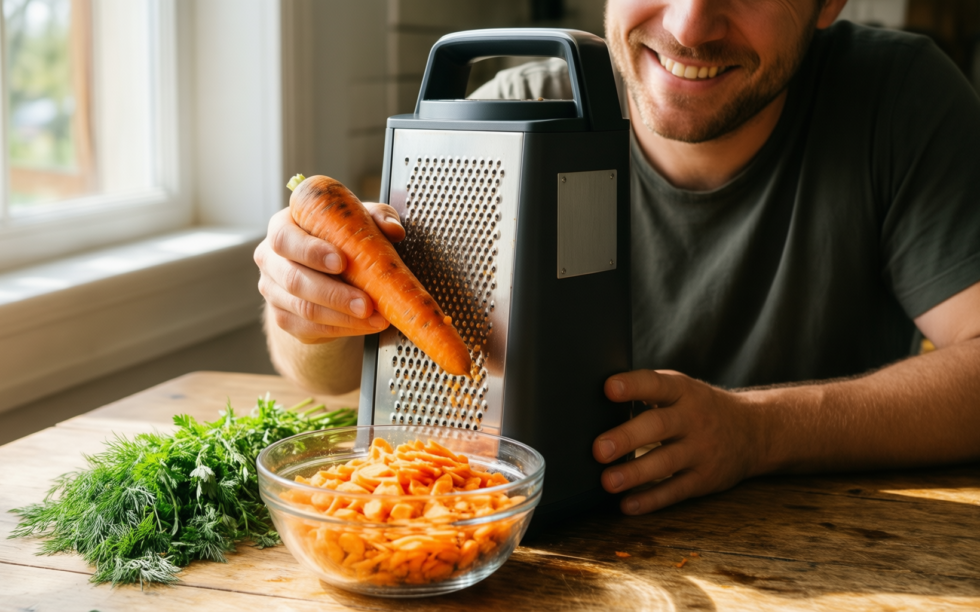
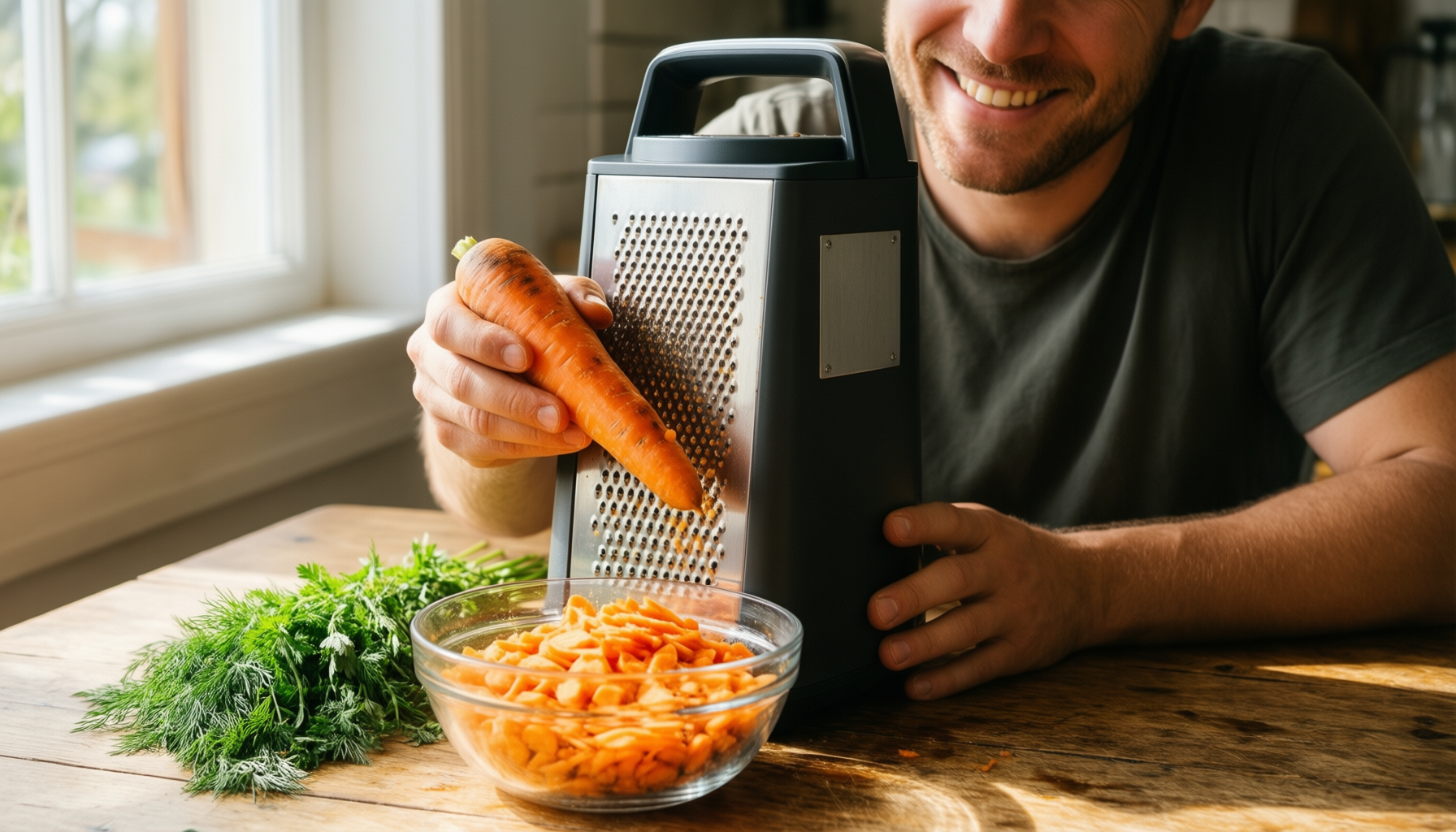
The rotating mechanism of this drum grater offers a distinct advantage over traditional box graters when dealing with soft vegetables. Box graters often cause soft ingredients like zucchini or carrots to stick to the surface, making the process messy and slow. The continuous rotation of the drum helps to push the grated material away from the blade, reducing sticking and ensuring a smoother workflow. This is particularly noticeable when shredding cabbage or kale for slaws, where the uniformity of the cut is crucial for texture.
The safety aspect of the enclosed drum design is another major benefit, especially in households with children. Box graters have exposed blades that can be dangerous if a finger slips or if a child reaches for the tool. The housing of this drum grater keeps your fingers away from the cutting surface, and the handy pusher adds an extra layer of safety. This makes it a safer option for families who want to involve younger members in cooking without the risk of injury. The BPA-free ABS plastic housing is durable and easy to clean, adding to its practicality for everyday use.
When I tested this tool with various vegetables, I found that the consistency of the cut was impressive. The 430 stainless steel blade maintains its sharpness well, ensuring that each rotation produces a uniform result. This is particularly useful for recipes that require a specific texture, such as coleslaw or grated carrots for slaw. The ability to switch between blades means you can adjust the coarseness of the cut to suit your needs, from fine grating to coarse chopping. This versatility makes it a valuable addition to any kitchen, especially for those who enjoy experimenting with different recipes.
Handling Soft Ingredients
Soft vegetables like tomatoes or cucumbers can be tricky to grate without becoming mushy. The drum grater handles these ingredients well, providing a clean cut that does not crush the food. This is a significant improvement over box graters, which can sometimes tear or crush soft ingredients. The enclosed design also helps to contain any mess, keeping your counter clean and tidy.
Uniformity for Recipes
Many recipes require a specific texture for ingredients, such as fine breadcrumbs or uniformly grated cheese. The drum grater provides a consistent result that is hard to achieve with manual graters. This consistency is crucial for achieving the desired texture and flavor in your dishes. The ability to control the coarseness of the cut allows you to tailor the result to your specific needs, making it a versatile tool for various culinary applications.
Dishwasher Safety and BPA-Free Materials: What UK Buyers Need to Check
One of the most important aspects of this drum grater is its material composition. The housing is made of food-grade BPA-free ABS plastic, which meets food safety standards. This is a crucial feature for UK buyers who are concerned about the safety of their kitchen tools. The BPA-free certification ensures that no harmful chemicals leach into your food, making it a safe choice for daily use. The 430 stainless steel blade is also durable and resistant to rust, provided it is cleaned and dried properly.
However, it is important to note that this tool is not dishwasher safe. The product description explicitly states that it is not dishwasher safe, which is a common oversight for buyers who assume that all plastic kitchen tools can go in the dishwasher. The blade assembly must be cleaned manually under running water to prevent rust and ensure longevity. The housing can be wiped down with a damp cloth, but the blade requires more careful attention. This is a minor inconvenience, but it is worth noting if you prefer the convenience of a dishwasher.
Storage is another consideration for UK kitchens, where space is often at a premium. The compact size of this drum grater makes it easy to store in a drawer or on a shelf. I recommend using a dedicated drawer slot or a wall mount to keep the tool accessible but out of the way. This ensures that it is ready to use when you need it, without taking up valuable counter space. The included small brush is also useful for cleaning the internal parts of the drum, ensuring that no food particles are left behind.
Cleaning the Blade Assembly
The blade assembly is the most critical part to clean, as food particles can get stuck in the teeth of the blade. I recommend using the provided small brush to gently scrub the blade after each use. This prevents buildup and ensures that the blade remains sharp and effective. It is also important to dry the blade immediately after washing to prevent rust, especially in humid UK climates. A quick wipe with a dry cloth can make a significant difference in the longevity of the tool.
Storage Tips for Small Kitchens
In small UK kitchens, storage is a major concern. The compact design of this drum grater makes it easy to store in a drawer or on a shelf. I recommend using a dedicated drawer slot or a wall mount to keep the tool accessible but out of the way. This ensures that it is ready to use when you need it, without taking up valuable counter space. The included small brush is also useful for cleaning the internal parts of the drum, ensuring that no food particles are left behind.
Maintenance Tips for Long-Lasting Blade Performance
Proper maintenance is key to ensuring that your drum grater lasts for years. The first step is to disassemble the tool for deep cleaning. The three interchangeable blades can be removed and cleaned individually, which allows you to access all parts of the mechanism. This is particularly important for removing food particles that may be stuck in the blade teeth. The housing can be wiped down with a damp cloth, but the blade requires more careful attention.
Drying the blade immediately after washing is crucial to prevent corrosion, especially in humid UK climates. I recommend using a soft cloth to dry the blade thoroughly after each use. This prevents rust and ensures that the blade remains sharp and effective. It is also important to store the tool in a dry place to prevent moisture buildup. A quick wipe with a dry cloth can make a significant difference in the longevity of the tool.
Using a soft brush for the blade area is another important maintenance tip. The provided small brush is ideal for this purpose, as it is gentle enough to avoid scratching the blade while still being effective at removing food particles. I recommend using the brush after each use to keep the blade clean and sharp. This simple habit can extend the life of your tool and ensure that it continues to perform well for years to come.
Disassembly for Deep Cleaning
Disassembling the drum grater for deep cleaning is a simple process. The three interchangeable blades can be removed and cleaned individually, which allows you to access all parts of the mechanism. This is particularly important for removing food particles that may be stuck in the blade teeth. The housing can be wiped down with a damp cloth, but the blade requires more careful attention. This ensures that no food particles are left behind, which can affect the performance and hygiene of the tool.
Preventing Rust in Humid Climates
Humid climates can be tough on stainless steel blades, so it is important to take extra care to prevent rust. Drying the blade immediately after washing is crucial, and storing the tool in a dry place can also help. I recommend using a soft cloth to dry the blade thoroughly after each use. This prevents rust and ensures that the blade remains sharp and effective. A quick wipe with a dry cloth can make a significant difference in the longevity of the tool.
Final Verdict
Who This Is Perfect For: This drum grater is ideal for home cooks in compact UK kitchens who prioritize safety and space efficiency. If you frequently prepare soft vegetables like zucchini, carrots, or cabbage for slaws and want to avoid the mess and injury risk of exposed box grater blades, this tool is a strong fit. It is also well-suited for those who want to consolidate their prep tools, replacing multiple single-function graters and slicers with one unit that fits easily in a drawer.
Who Should Choose Alternatives: You should look elsewhere if your primary cooking needs involve high-volume commercial prep or large family batches, as the manual crank mechanism may be too slow for those demands. Additionally, if you exclusively grate dense, dry hard cheeses like Parmesan or require very fine, uniform citrus zest, a dedicated flat microplane or rotary zester will offer better precision and less clogging than this enclosed drum design. Finally, if you strictly prefer dishwasher-safe kitchen tools to minimize manual cleaning, this model’s requirement for hand-washing the blade assembly may be a dealbreaker.
🛒 Check Price on Amazon →✓ See today's price & reviews