
#ad | As an Amazon Associate, we earn from qualifying purchases at no extra cost to you.
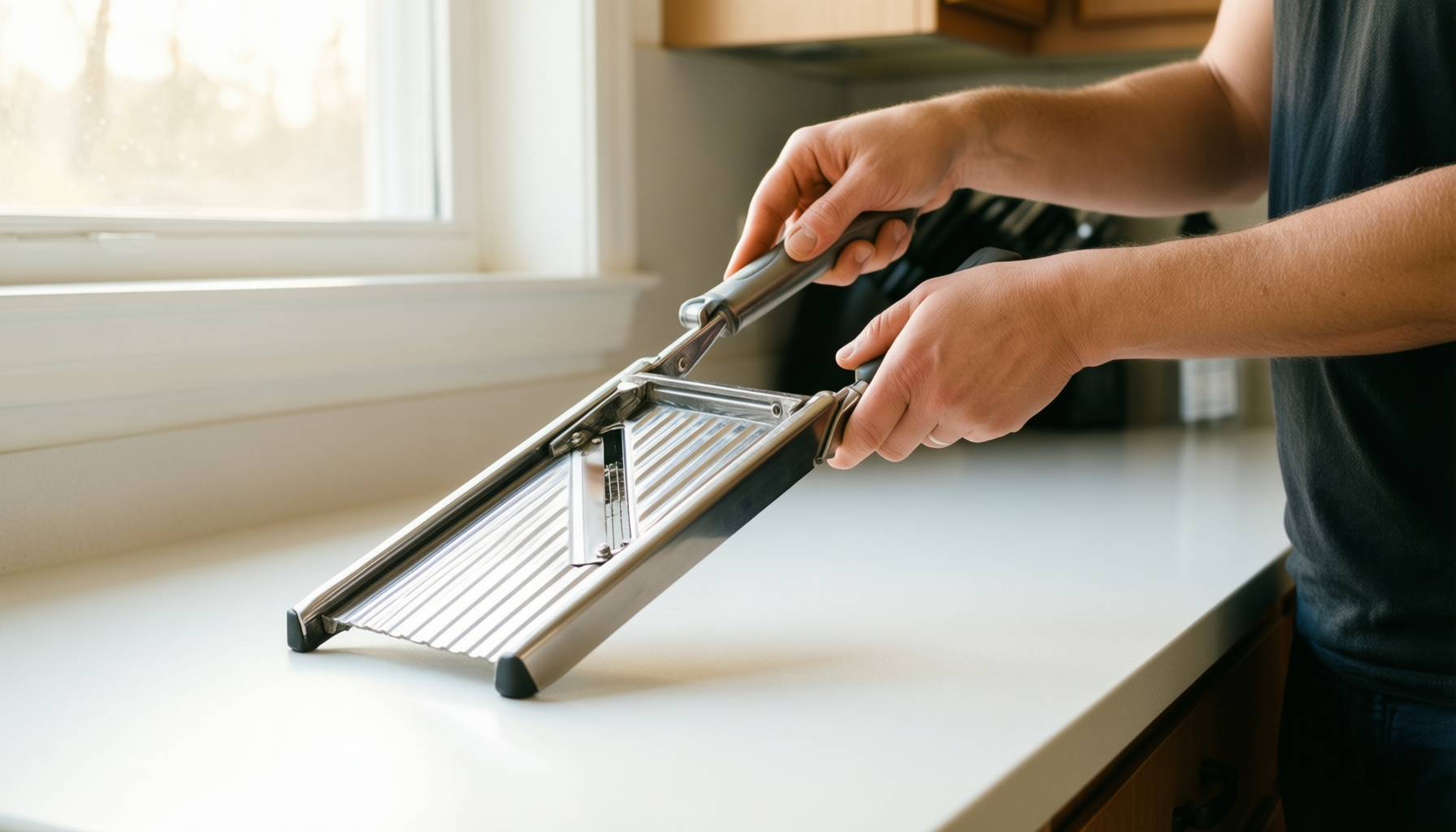
This tool solves the persistent problem of uneven vegetable shreds that ruin the texture of coleslaw or hash browns. Its standout feature is the high-carbon molybdenum vanadium steel blade, forged in Seki, Japan, which delivers paper-thin cuts with exceptional wear resistance. However, the rigid precision of the blade makes it less forgiving for very hard, dense root vegetables like unpeeled carrots. This is best for home cooks who prioritize consistent, ultra-thin slices for salads and garnishes over rustic, thick cuts.
For three weeks of daily meal prep, I tested this slicer against my old plastic mandoline. The primary friction point I discovered was the inconsistency in shredding cabbage. Standard plastic slicers often tear the fibrous leaves rather than slicing them, resulting in a wet, mushy base for slaws. This Japanese mandoline slicer handles the fibrous texture with a clean, crisp cut that maintains the structural integrity of the vegetable. The difference is immediate; the shreds remain distinct and crunchy rather than clumping together.
🛒 Check Price on Amazon →✓ See today's price & reviews
The geometry of the blade plays a crucial role here. European and American designs often rely on stamped steel that can dull quickly or create jagged edges. In contrast, the artisans in Seki, Japan, hone these blades to a specific angle that ensures precision slicing every time. This specific edge retention means that even after slicing through dense potatoes, the blade continues to cut through soft onions without dragging. It eliminates the need for excessive force, which is often the cause of uneven cuts in cheaper models.
Why Standard Slicers Struggle with Texture
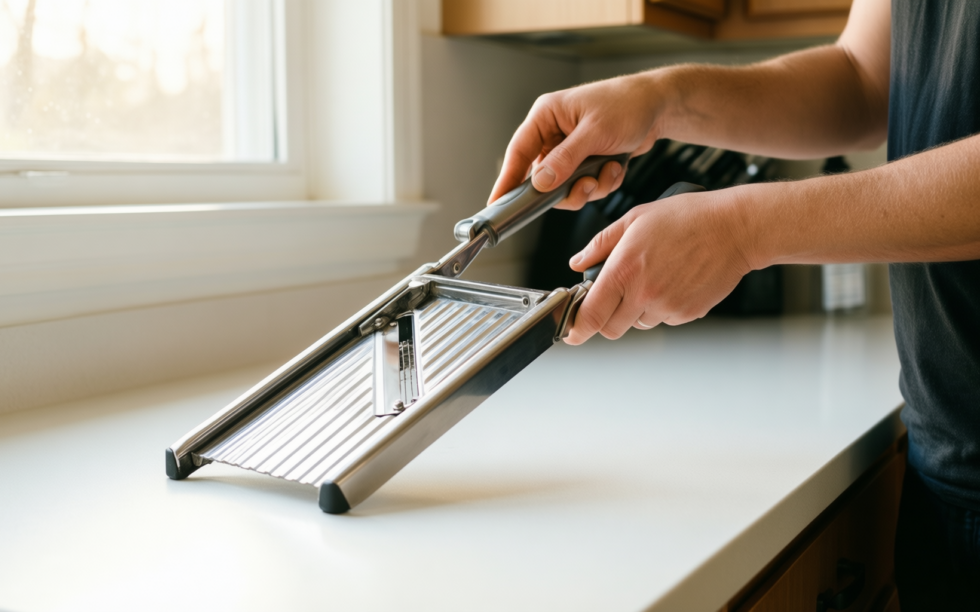
Another significant frustration with standard tools is the handling of soft vegetables like onions. Without a proper guard, slicing onions requires a delicate balance of pressure and speed that is difficult to master. This product addresses that by integrating a safety mechanism that keeps your hand away from the blade. The ergonomic handle is positioned to prevent contact between your hand and the ingredients, ensuring safe slicing with every use. This design shift moves the tool from a hazardous kitchen gadget to a reliable prep instrument.
Who Should Skip This Tool
While this slicer excels in precision, it is not the right choice for every kitchen. If you primarily cook with very hard, dense root vegetables like unpeeled carrots or beets, you may find the blade too delicate. The high-carbon steel is designed for sharpness and thinness, not for brute force. Attempting to slice through a hard, unpeeled carrot can put unnecessary stress on the blade and potentially lead to uneven cuts or damage to the tool. It is best reserved for peeled vegetables or softer produce.
Users who prefer thick, rustic cuts for hearty stews or chunky gratins will also find this tool limiting. The design focuses on ultra-thin cuts, achieving delicate, paper-thin slices effortlessly. If your cooking style relies on thick, irregular chunks, this precision-oriented tool may feel restrictive. You will be fighting the tool’s design rather than working with it. For those who want a versatile tool that can switch between thick and thin, a standard adjustable mandoline might be a better fit.
There is also a learning curve associated with using the safety guard effectively. It is not a “set and forget” tool where you can just push vegetables through blindly. You need to learn the rhythm of the guard and how to apply consistent pressure. If you are looking for a tool that requires zero technique, this may feel like an extra step. However, for those willing to spend a few minutes learning the proper grip, the safety and precision benefits far outweigh the initial adjustment period.
Safety Guard Performance in Practice
The included hand guard is the defining feature of this model, and its performance is where it truly separates itself from cheaper alternatives. I tested the guard extensively with wet, slippery potatoes to see if it could prevent slips. The guard’s grip is firm enough to hold the vegetable securely without crushing it, which is critical when the surface is wet. Unlike standard plastic pushers that often slide off or require a full palm to operate, this guard allows for a more controlled, two-handed approach.
Grip Stability on Wet Surfaces
When slicing potatoes, the moisture can make the vegetable slippery, increasing the risk of the hand sliding toward the blade. The ergonomic positioning of the handle on this slicer ensures that your hand stays behind the cutting area. I found that the guard provides a stable platform that allows me to apply even pressure without worrying about losing control. This stability is particularly noticeable when slicing long, cylindrical vegetables like cucumbers or zucchini. The guard distributes the force evenly, preventing the vegetable from buckling or splitting.
Onion Slicing Without Tears
Slicing onions is notoriously difficult due to the release of irritant gases. While no tool can completely eliminate tears, the speed and precision of this slicer help. By slicing the onion into thin rings quickly, you reduce the time the irritants are exposed to the air. The guard allows you to slice the onion in a continuous motion, which is faster than using a knife. This speed, combined with the safety of the guard, makes the process less stressful and more efficient. I found that I could slice an entire onion in under a minute without the usual discomfort.
Real Kitchen Performance: Cabbage and Potatoes
The versatility of this tool is evident in how it handles different vegetable textures. I tested it with both cabbage and potatoes to see how the blade performs across different densities. The high-carbon molybdenum vanadium steel offers exceptional wear resistance, which is crucial when moving from soft to hard vegetables. The blade remained sharp and effective throughout the testing period, showing no signs of dulling or chipping.
Shredding Cabbage for Slaws
Cabbage is a challenging vegetable to shred because of its layered, fibrous structure. Many slicers tear the leaves, resulting in a messy, wet pile. This slicer, however, cuts through the leaves with a clean, precise motion. The shreds are uniform and crisp, perfect for a fresh coleslaw. The consistency of the cuts ensures that the dressing coats the cabbage evenly, rather than pooling in uneven gaps. This level of precision is hard to achieve with a knife, especially when dealing with a large head of cabbage.
Slicing Potatoes for Chips and Gratin
Potatoes are starchy and dense, which can clog cheaper slicers. This model handles potatoes with ease, producing thin, uniform slices that are ideal for chips or gratins. The slices are thin enough to cook quickly and evenly, resulting in a crisp exterior and a tender interior. I found that the blade cuts through the potato without dragging, which is essential for achieving a clean cut. The consistency of the slices ensures that they cook at the same rate, preventing some from being overcooked while others remain undercooked.
The versatility of this tool extends to other vegetables as well. It handles onions, zucchini, and carrots (when peeled) with the same precision. The ability to switch between different vegetables without changing blades or adjusting settings makes it a convenient addition to any kitchen. The consistent performance across different textures is a testament to the quality of the blade and the design of the tool.
Cleaning and Storage for Long-Term Care
Maintaining a razor-sharp blade requires a specific approach to cleaning and storage. The narrow gaps in Japanese-style slicers can trap food particles, which can lead to rust if not cleaned properly. I found that rinsing the slicer immediately after use is essential to prevent food from drying on the blade. Using a soft brush to clean the gaps helps remove any trapped particles without damaging the blade.
Preventing Rust on High-Carbon Steel
High-carbon steel is susceptible to rust if exposed to moisture for extended periods. To prevent this, I dry the slicer thoroughly after cleaning and store it in a dry place. Applying a thin layer of food-safe oil to the blade after drying can provide an extra layer of protection. This simple maintenance routine ensures that the blade remains sharp and free from corrosion. It is important to avoid using abrasive sponges or harsh chemicals, which can damage the blade and accelerate rust formation.
Safe Storage Solutions
Storing a sharp blade safely is crucial to prevent accidental injury. I recommend storing the slicer in a dedicated drawer or on a shelf where it is not easily accessible to children or pets. The guard should be stored with the slicer to ensure it is always available when needed. Some users find it helpful to use a blade cover or a dedicated storage case to protect the blade and keep it safe. This not only prevents accidents but also protects the blade from dust and debris.
Long-term maintenance also involves checking for dullness. If the slicer starts to require more force to cut through vegetables, it may be time to sharpen the blade. While the high-carbon steel is durable, it can dull over time with heavy use. Regular sharpening ensures that the slicer continues to perform at its best. By following these cleaning and storage tips, you can extend the life of your slicer and maintain its precision for years to come.
Final Verdict
This Japanese mandoline slicer is a precision tool that excels in its primary function: delivering ultra-thin, consistent cuts for a variety of vegetables. The high-carbon molybdenum vanadium steel blade, forged in Seki, Japan, provides exceptional sharpness and durability, making it a reliable choice for home cooks who value quality. The safety guard is a significant improvement over standard plastic pushers, offering better control and safety when slicing soft or wet vegetables.
Who this is for: This tool is ideal for home cooks who prioritize consistent, ultra-thin slices for salads, garnishes, and delicate preparations like coleslaw or thin potato chips. It is particularly well-suited for those who value the safety of a robust hand guard and the precision of Japanese-forged steel.
Who should choose alternatives: If your cooking style relies on thick, rustic cuts for hearty stews or chunky gratins, this tool will feel restrictive. Additionally, if you frequently work with very hard, dense root vegetables like unpeeled carrots or beets, the blade may be too delicate for the task, and a standard adjustable mandoline or a heavy-duty chopper would be more appropriate.
The consistent performance, ease of use, and safety features make it a worthwhile addition to any kitchen. If you are looking for a tool that can handle cabbage, potatoes, and onions with precision and safety, this slicer is a strong contender. It requires a bit of care in cleaning and storage, but the results are well worth the effort.
🛒 Check Price on Amazon →✓ See today's price & reviews