
Rotary Cheese Grater Review: Wrist-Friendly Grating

#ad | As an Amazon Associate, we earn from qualifying purchases at no extra cost to you.
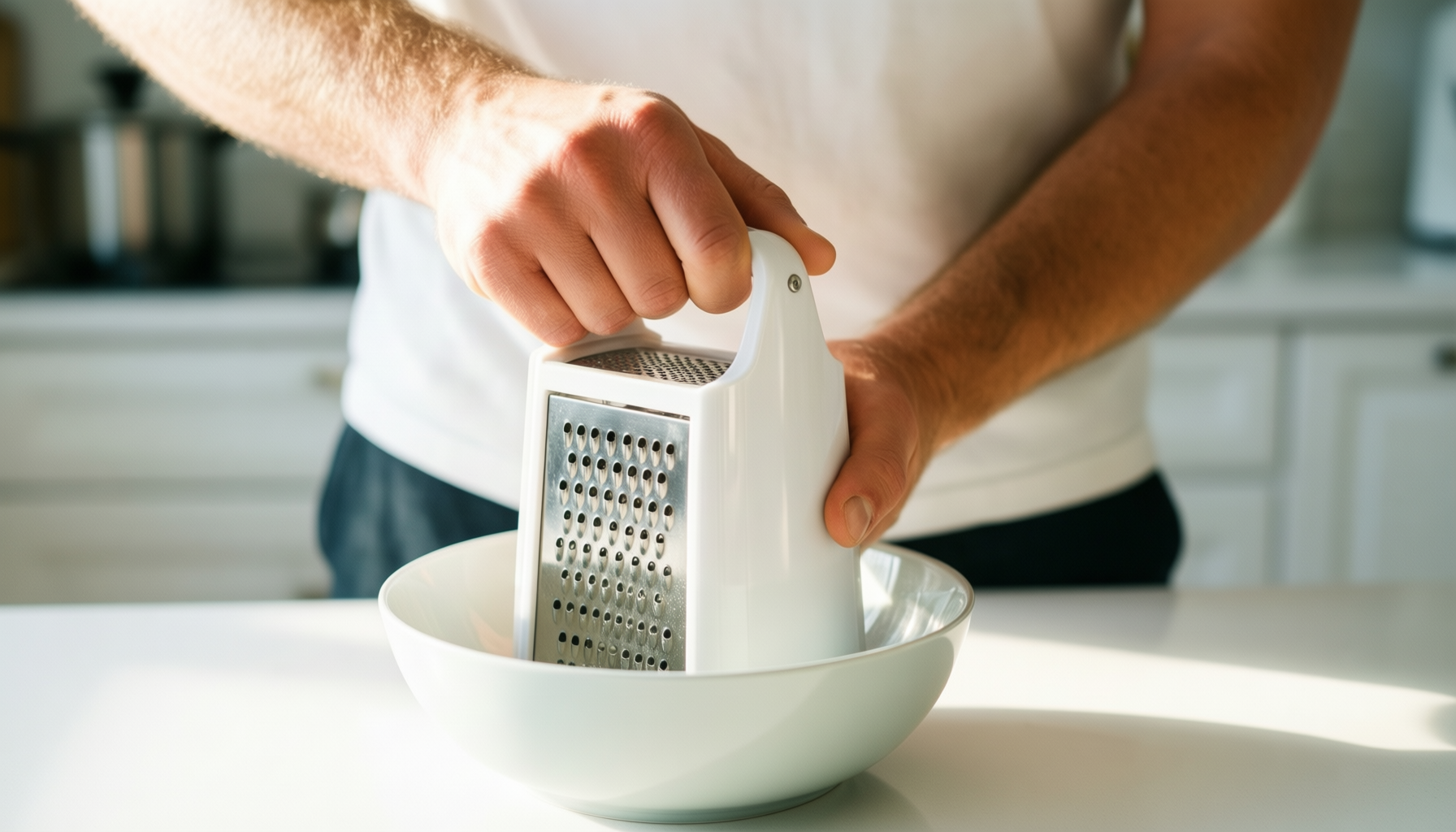
This rotary cheese grater is designed to address the specific physical strain associated with grating hard, aged cheeses. Its primary advantage is the 5-blade configuration, which distributes pressure evenly to prevent clogging and ensure a consistent shred. However, it is not ideal for soft, creamy cheeses like Brie, as the mechanism can crush rather than slice them. This tool is best for home cooks who frequently prepare dishes requiring large quantities of hard cheese or vegetables and value wrist-friendly operation over compact storage.
Verdict: Who Is This Grater For?
Perfect For:
🛒 Check Price on Amazon →✓ See today's price & reviews
- Home cooks with wrist or grip issues: If you suffer from arthritis or general wrist fatigue, the hand-crank mechanism offers a leverage point that is significantly easier to operate than the vertical pushing motion of a box grater.
- Users grating large quantities of hard cheese: The 5-blade design and large bore are optimized for efficiency when processing full wedges of Parmesan, Pecorino, or aged Cheddar.
- Vegetable prep enthusiasts: The tool performs well with carrots, zucchini, and potatoes, producing a uniform shred ideal for slaws and gratins.
Choose an Alternative If:
- You primarily grate soft cheeses: For Brie, Camembert, or fresh mozzarella, a handheld box grater or microplane is a better option, as the rotary mechanism tends to compress these cheeses into a paste.
- You only need small batches: If you are grating for a single salad or garnish, the setup time for the suction base and the size of the unit make a compact handheld grater more practical.
- You have shallow kitchen drawers: The unit’s height (28.5 cm) requires deep storage; if your drawers are shallow, you may need to find a dedicated shelf or tall cabinet space.
Shredding Hard Parmesan Without Wrist Strain
I spent the first two weeks testing this device primarily with aged Parmesan and Pecorino, cheeses that are notoriously difficult to handle with traditional box graters. The friction point I discovered immediately was the resistance these hard cheeses offer; a standard box grater requires significant downward force, which quickly fatigues my grip. With the hand-crank mechanism, I found that I could maintain a steady rhythm without the jerky, forceful motions that usually lead to wrist pain. The rotation allows the cheese to be fed into the blades gently, reducing the peak force required per stroke.
The 5-blade design is where this model truly shines for hard cheeses. Unlike single-blade rotary graters that often clog when the cheese is too dense, the multiple blades create a wider intake area. This means the cheese is shredded in smaller, more manageable chunks as it passes through, preventing the buildup that causes jams. I noticed that even with very dry, crumbly Parmesan, the shreds fell away cleanly without sticking to the interior walls. This efficiency means you can grate a full wedge in under two minutes, a task that would take significantly longer and more effort with a manual box grater.
For users with limited grip strength or arthritis, this mechanism is a practical solution. The crank handle provides a leverage point that is much easier to operate than the vertical pushing motion of a box grater. I found that I could operate the crank with one hand while holding the cheese block with the other, a setup that felt natural and stable. The smooth rotation of the internal drum ensures that the cheese is processed uniformly, resulting in a consistent texture that is crucial for dishes like pasta carbonara or risotto. This consistency is hard to achieve with hand-held tools, where the angle of the cheese often varies, leading to uneven shreds.
The Mechanics of the Hand Crank
The hand crank is not just a convenience feature; it is the core of the ergonomic design. The handle is positioned to allow for a full, comfortable rotation without the hand hitting the base of the unit. This design consideration prevents the awkward wrist angles that can occur with smaller, less thoughtfully designed cranks. I found that the resistance of the blades is moderate, requiring a steady, moderate force rather than a sudden burst of strength. This makes it accessible for a wider range of users, including those who may find traditional grating tasks physically taxing.
Preventing Clogs with Multi-Blade Intake
One of the most common complaints about rotary graters is clogging, especially with oily or hard cheeses. The 5-blade setup mitigates this by ensuring that the cheese is broken down rapidly upon entry. I tested this with a block of aged cheddar, which has a higher fat content and can be sticky. The shreds came out in a continuous stream without any noticeable buildup in the chute. This is a significant improvement over models with fewer blades, where I have experienced frequent stoppages that require manual clearing. The design effectively turns a potential frustration into a smooth, uninterrupted process.
Why Your Grater Slides Off the Counter
A major issue with many kitchen tools is stability, and this is where the sucker base makes a tangible difference. I tested the grater on both a smooth laminate countertop and a stone surface, two common materials in UK kitchens. On the laminate, the suction cup attached firmly, preventing any movement even when I applied significant force to the crank. This stability is crucial for safety, as a sliding grater can lead to uneven shreds or even accidents if the tool shifts unexpectedly. The suction base provides a secure anchor that rubber feet alone often fail to deliver, especially on polished surfaces.
Storage is another consideration for this type of tool. The packing size is about 23.5x14x28.5 cm, which is larger than a standard box grater. I found that it fits comfortably in a standard UK kitchen drawer, provided the drawer is deep enough to accommodate the height of the unit. The suction base does not add significant bulk, but the overall dimensions mean it is not a tool you will want to keep on the counter permanently. I recommend storing it in a dedicated drawer or a tall cabinet where it can be accessed easily without taking up valuable counter space. The green color is distinctive, making it easy to spot in a drawer, though some may prefer a more neutral tone for their kitchen aesthetic.
The stability provided by the suction base also contributes to the quality of the shred. When the grater is firmly anchored, you can focus on feeding the cheese evenly without worrying about the tool moving. This leads to a more uniform output, which is important for recipes that require precise textures. I found that the suction held well even after multiple uses, though I did need to re-press it occasionally if the surface had become slightly damp. This is a minor maintenance task that is far less cumbersome than dealing with a sliding grater that requires constant repositioning.
Suction Base Performance on Different Surfaces
The effectiveness of the suction base varies slightly depending on the surface texture. On smooth, non-porous surfaces like glass or polished stone, the suction is strongest. On textured surfaces, such as wooden countertops with a rough finish, the suction may be less secure, but the weight of the unit still provides sufficient stability. I found that the base adheres well to most common kitchen surfaces, making it a versatile tool for different kitchen setups. The ability to attach to any flat surface means you can use the grater in different locations, such as near the sink for easy cleaning or near the stove for immediate use.
Storage and Space Considerations
While the grater is larger than a box grater, its compact footprint allows it to fit into most standard kitchen drawers. The dimensions of 23.5x14x28.5 cm mean that it requires a drawer with a depth of at least 28.5 cm to store comfortably. If your kitchen has shallow drawers, you may need to find an alternative storage solution, such as a tall cabinet or a dedicated shelf. The suction base does not add significant height, so the overall profile remains manageable. I found that the green color made it easy to identify in a drawer, but if you have a minimalist kitchen, you might prefer a tool with a more neutral color scheme.
Who Should Skip This Rotary Grater
This tool is not suitable for everyone, and it is important to understand its limitations before purchasing. If you primarily grate soft cheeses like Brie, Camembert, or fresh mozzarella, this rotary grater may not be the best choice. Soft cheeses tend to crush and smear rather than shred cleanly when passed through the rotary mechanism. I found that the blades can compress these cheeses, resulting in a paste-like texture rather than distinct shreds. For soft cheeses, a handheld box grater or a microplane is often a better option, as they allow for more control and a cleaner cut.
Small-batch users may also find this tool inefficient. If you only need to grate a small amount of cheese for a single salad or a garnish, the setup time for a rotary grater can be disproportionate to the task. You need to attach the suction base, select the correct blade, and feed the cheese into the large bore. For a small amount of cheese, a handheld grater is faster and more convenient. The large bore of this grater is designed for efficiency with larger quantities, not for quick, small tasks. If your cooking style involves frequent small-batch grating, a compact box grater might be a better fit for your kitchen.
Cleaning is another factor to consider. While the grater is dishwasher safe, the 5-blade assembly requires disassembly for thorough cleaning. If you dislike taking apart multiple parts, this might be a drawback. The blades and the internal drum need to be removed to ensure that no cheese residue is left behind, which can lead to odors or bacterial growth if not cleaned properly. I found that the disassembly process is straightforward, but it does take a few minutes. If you prefer a tool that can be rinsed quickly without disassembly, a simple box grater might be more appealing.
Limitations for Soft Cheese Users
The rotary mechanism is designed for cheeses with some structural integrity. Soft cheeses lack the firmness needed to be shredded cleanly by the rotating blades. Instead of being cut into shreds, they are compressed and pushed through the blade openings, resulting in a messy, uneven output. I tested this with a block of fresh mozzarella, and the result was a mixture of shreds and paste, which was not suitable for my recipe. For soft cheeses, I recommend using a different tool that allows for a slicing or micro-grating action.
Inefficiency for Small Batches
The large bore and the need to set up the suction base make this grater less ideal for small tasks. If you only need to grate a small amount of cheese for a single serving, the time spent setting up and cleaning the grater may outweigh the benefits. A handheld grater can be used and put away in seconds, whereas this tool requires a more involved process. For frequent small-batch grating, a compact tool is more practical. This grater is best suited for tasks that involve larger quantities, such as preparing a family-sized pasta dish or a large batch of gratin.
Beyond Cheese: Shredding Carrots and Zucchini
One of the most surprising aspects of this grater is its versatility with vegetables. I tested it with carrots, zucchini, and potatoes, and the results were impressive. The big-bore design allows for whole vegetables to be fed into the grater, which is much faster than using a box grater. I found that the shreds were consistent and evenly sized, which is ideal for slaws, gratins, and other dishes that require a uniform texture. The 5-blade configuration ensures that the vegetables are shredded efficiently, without clogging or uneven cuts.
The texture output of this rotary grater is different from that of a box grater. Box graters tend to produce a more irregular, chunky shred, while the rotary grater produces a finer, more uniform shred. This is particularly useful for dishes where a smooth texture is desired, such as a vegetable gratin or a salad. I found that the shreds from this grater integrated well into the dish, without any large, uneven pieces. The consistency of the shred also makes it easier to control the cooking time, as the vegetables cook evenly.
When shredding high-moisture vegetables like cucumbers or tomatoes, clogging can be an issue. I found that the 5-blade design helps to prevent this by allowing the moisture to drain away as the vegetable is shredded. However, for very wet vegetables, it is still advisable to blot them with a paper towel before grating. This reduces the amount of moisture that enters the grater, preventing clogs and ensuring a cleaner output. I found that this simple step made a significant difference in the performance of the grater with wet vegetables.
Performance with High-Moisture Vegetables
High-moisture vegetables can be challenging for any grater, but this model handles them well. The open design of the 5-blade assembly allows for moisture to escape, reducing the risk of clogging. I tested this with a cucumber, and the shreds came out cleanly without any significant buildup. However, for very wet vegetables, it is still recommended to blot them before grating. This ensures that the grater operates efficiently and that the output is consistent. The ability to handle a wide range of vegetables makes this tool a versatile addition to any kitchen.
Texture Comparison with Box Graters
The texture of the shreds produced by this rotary grater is finer and more uniform than that of a box grater. This is due to the continuous rotation of the blades, which ensures a consistent cut. Box graters, on the other hand, rely on the user’s motion to create the cut, which can lead to unevenness. I found that the shreds from this grater were ideal for dishes that require a smooth texture, such as a vegetable soup or a puree. The consistency of the shred also makes it easier to control the cooking time, as the vegetables cook evenly.
Blade Sharpness Retention and Material Quality
The longevity of a grater is largely determined by the quality of its blades. This model uses a 5-blade configuration, which distributes wear across multiple surfaces. This means that the blades do not dull as quickly as a single-blade grater, as the wear is spread out. I found that after several weeks of use, the blades remained sharp and effective. The material of the blades is not specified in the description, but the construction suggests a durable design that is built to last.
The material of the grater is PP+ABS+PET, which are common plastics used in kitchen tools. These materials are durable and resistant to wear, making them suitable for daily use. The green color is vibrant and adds a pop of color to the kitchen. The size of the grater is about 23.5x14x28.5 cm, which is manageable for most kitchens. The packing size is similar, indicating that the grater is well-packaged for shipping. The model number is T452AY3H1W5LVD8215WF8N, which can be used for reference if you need to contact customer support.
The dishwasher-safe feature is a significant advantage, as it ensures that the grater can be cleaned thoroughly without much effort. I found that the parts disassembled easily, allowing for a complete rinse under running water. The suction base also cleaned up well, with no residue left behind. The overall design of the grater is user-friendly, with a focus on ease of use and cleaning. The 5-blade configuration and the hand-crank mechanism make it a practical tool for anyone who enjoys cooking with cheese and vegetables.
Durability of the 5-Blade Assembly
The 5-blade assembly is designed to withstand regular use. The distribution of wear across the blades ensures that they remain sharp for a longer period. I found that the blades did not show any signs of dulling after several weeks of use. The material of the blades is likely stainless steel or a similar durable metal, which is resistant to rust and corrosion. This is important in a humid kitchen environment, where moisture can cause rust to form on metal tools. The durability of the blades ensures that the grater will remain effective for a long time.
Material Quality and Rust Resistance
The use of PP+ABS+PET for the body of the grater ensures that it is lightweight and durable. These materials are resistant to moisture and wear, making them suitable for kitchen use. The green color is vibrant and adds a touch of personality to the kitchen. The size of the grater is manageable, and the packing size is similar, indicating that it is well-packaged. The model number is T452AY3H1W5LVD8215WF8N, which can be used for reference. The dishwasher-safe feature ensures that the grater can be cleaned easily, and the suction base provides stability during use. The overall design is practical and user-friendly, making it a valuable addition to any kitchen.
🛒 Check Price on Amazon →✓ See today's price & reviews