
#ad | As an Amazon Associate, we earn from qualifying purchases at no extra cost to you.

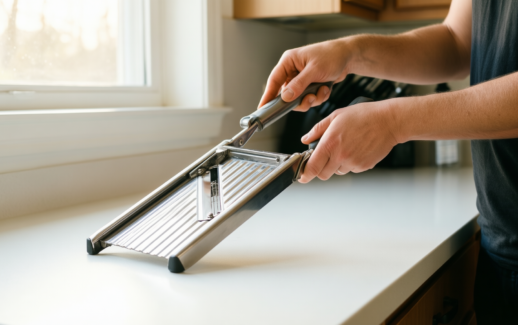
The Benriner No. 64 addresses a specific frustration in vegetable prep: the inconsistency of hand-sliced garnishes and the bulk of large, heavy mandolins. With a compact footprint of 32 x 12 x 4 cm, it fits easily in a standard kitchen drawer, unlike larger models that require dedicated cabinet space. Its standout feature is the simple dial for adjusting thickness, which allows for precise control over slice depth without complex mechanisms. However, a key limitation is its design for softer vegetables; forcing extremely hard, dense roots through the blade can risk damage to the tool. This product is best for home cooks who prioritize compact storage and consistent, thin slicing for salads and garnishes over heavy-duty root vegetable processing.
For home cooks who find traditional mandolins too bulky for their kitchen, the Benriner No. 64 offers a practical alternative. The tool’s rigid construction and non-slip rubber base provide stability on the countertop, addressing common safety concerns associated with smaller slicing tools. By focusing on precision for softer produce like zucchini, cucumbers, and carrots, it delivers uniform slices that cook evenly, a critical factor for achieving consistent results in roasting and salad preparation.
🛒 Check Price on Amazon →✓ See today's price & reviews
This review examines the specific strengths and limitations of the Benriner No. 64 based on its design features and intended use cases. We will look at how the adjustable dial impacts slice consistency, why the tool is unsuitable for hard root vegetables, and how its Japanese manufacturing quality compares to plastic alternatives. The goal is to help you determine if this compact mandolin fits your specific cooking habits and storage constraints.
Slicing Uniform Carrots for Roasting Without the Mess
The primary advantage of this model lies in its ability to produce uniform slices that cook evenly. When roasting vegetables, inconsistent thickness leads to some pieces burning while others remain raw. The adjustable dial on the Benriner No. 64 allows you to set a specific thickness, ensuring that every carrot slice is identical in depth. This consistency is crucial for achieving the caramelized exterior and tender interior that uneven hand-slicing often fails to deliver.
The construction of the tool supports this precision. Unlike plastic alternatives that may warp or flex under pressure, the sturdy build of this Japanese mandolin keeps the blade stable during use. This stability ensures that the slice thickness remains constant from the first cut to the last. For a home cook preparing a large batch of roasted vegetables, this reliability means less time adjusting and more time monitoring the oven.
A practical use scenario involves preparing a medley of root vegetables for a Sunday roast. By using the medium blade setting, you can slice carrots, parsnips, and potatoes to the same thickness. This uniformity ensures that all vegetables finish cooking at the same time, eliminating the need to stagger their entry into the oven. The result is a cohesive dish where no single vegetable is overcooked or undercooked.
The Role of the Adjustable Dial in Consistency
The simple dial mechanism is not just a convenience feature; it is the core of the tool’s precision. It allows for micro-adjustments that are difficult to achieve with fixed-blade mandolins. If you find your slices are slightly too thick for a salad, you can turn the dial a fraction of a turn to achieve the desired thinness. This level of control is essential for professional-looking results.
Collecting Slices Directly into Bowls
One of the most overlooked features is the edge design that hooks onto bowl rims. This allows you to slice directly into a bowl, eliminating the need to transfer slices from a cutting board. This feature reduces cleanup time and prevents slices from sticking to the board. It is particularly useful when preparing delicate garnishes that can easily bruise or break during transfer.
Why This Mandolin Fails for Hard Root Vegetables Like Beets
Despite its precision, this tool has a clear limitation regarding extremely hard vegetables. The blade is designed for softer produce like zucchini, cucumbers, and carrots. Forcing dense, hard root vegetables like beets or unpeeled sweet potatoes through the blade can put excessive stress on the mechanism. This can lead to blade dulling or even damage to the dial adjustment system.
Buyers should be aware that attempting to slice very hard items may compromise the longevity of the tool. The non-slip rubber base provides stability, but it does not compensate for the force required to push a hard beet through a thin blade. Over time, this misuse can cause the blade to lose its sharpness, resulting in uneven slices that require more pressure to cut.
To preserve the tool’s performance, it is advisable to avoid using it for the hardest root vegetables. If you frequently prepare beets or dense sweet potatoes, consider using a different tool designed for heavy-duty slicing. This specific model excels with softer vegetables, where its precision and ease of use are most apparent.
Identifying Vegetables to Avoid
Certain vegetables pose a higher risk to the blade’s integrity. Beets, for example, are dense and fibrous, requiring significant force to slice. Similarly, unpeeled sweet potatoes have a hard skin that can catch on the blade. These items are better suited to a heavier, more robust mandolin or a food processor.
Preserving Blade Longevity
Proper use is key to maintaining the sharpness of the blade. Always ensure the vegetable is stable and use a gentle, consistent push. Avoid forcing the vegetable through if it resists. If you encounter resistance, it is a sign that the vegetable is too hard for this specific tool. Regular cleaning and drying after use also help prevent rust and maintain the blade’s edge.
How the No.64 Outperforms Plastic Mandolins in Safety and Precision
The quality of Japanese manufacturing is evident in the stability and sharpness of this tool. Unlike many plastic mandolins that flex under pressure, this model maintains a rigid structure. This rigidity ensures that the blade stays in place, providing a safer and more precise cut. The non-slip rubber base further enhances stability, reducing the risk of the tool sliding on the countertop.
The sharpness of the blade is another key advantage. A sharp blade cuts cleanly, reducing the need for excessive force. This not only improves safety but also results in cleaner slices with less crushing of the vegetable. In contrast, dull blades often require more pressure, increasing the risk of slipping and causing uneven cuts.
Ergonomics also play a role in the user experience. The compact size and lightweight design make it easy to handle, even during long prep sessions. The simple dial is easy to operate, and the tool is easy to disassemble for cleaning. This ease of use reduces hand fatigue compared to bulkier alternatives that require more effort to adjust and clean.
Blade Stability and Safety
The stability of the blade is critical for safe use. The rigid construction of this tool ensures that the blade does not shift during slicing. This stability provides a consistent cutting surface, reducing the risk of the blade slipping. The non-slip base adds an extra layer of safety, keeping the tool firmly in place on the countertop.
Ergonomic Design for Long Prep Sessions
The ergonomic design of this tool is tailored for ease of use. The compact size makes it easy to store and handle. The simple dial is intuitive to operate, allowing for quick adjustments without fiddling with complex mechanisms. The easy-to-disassemble design makes cleaning quick and hassle-free, encouraging regular maintenance.
Navigating UK Availability and Warranty Support for Japanese Tools
Buying a Japanese kitchen tool in the UK market requires some consideration regarding availability and support. While this product is available on Amazon UK, it is important to check the seller’s location and shipping times. Buying from a UK-based retailer can help avoid potential import duties and long shipping times. This ensures that you receive your tool quickly and without unexpected costs.
Warranty support for Japanese tools sold in the UK can vary. It is advisable to check the seller’s warranty policy before purchasing. Some sellers may offer limited warranties, while others may not provide any warranty at all. Understanding the warranty terms helps you make an informed decision and ensures that you are protected in case of any defects.
Maintaining the blade is essential for ensuring the tool lasts for years of professional use. Regular cleaning and drying after each use help prevent rust and maintain the blade’s sharpness. Avoid using abrasive cleaners or scrubbers that can damage the blade. Storing the tool in a dry place also helps prevent moisture-related issues.
Finding Reliable UK Retailers
When purchasing this tool, look for sellers with high ratings and positive reviews. This indicates a reliable source for the product. Check the shipping times and return policies to ensure that you are comfortable with the terms. Buying from a reputable seller reduces the risk of receiving a defective product or facing issues with returns.
Understanding Warranty Terms
Read the warranty terms carefully before purchasing. Some warranties may only cover manufacturing defects, while others may cover accidental damage. Understanding the scope of the warranty helps you know what is covered and what is not. If the warranty is limited, consider purchasing an extended warranty for additional protection.
Who Should Skip This
This tool is not suitable for everyone. If you frequently prepare large quantities of hard root vegetables like beets or unpeeled sweet potatoes, this model may not be the best choice. The blade is designed for softer vegetables, and forcing hard items through can damage the tool. For heavy-duty slicing, a more robust mandolin or a food processor would be a better option.
Additionally, if you prefer a larger cutting surface for slicing whole vegetables, this compact model may feel too small. The 32 x 12 x 4 cm size is ideal for smaller items or slices, but it may not accommodate larger vegetables without multiple passes. If your cooking style involves large, whole vegetables, consider a larger mandolin.
Finally, if you are looking for a tool that can handle a wide variety of textures and densities, this model’s focus on precision for softer vegetables may be a limitation. It excels in its specific niche but does not offer the versatility of a multi-purpose slicer.
Final Verdict
The Benriner No. 64 is a precise, compact mandolin ideal for home cooks who prioritize consistent slicing of softer vegetables. Its adjustable dial, sturdy construction, and easy-to-clean design make it a reliable tool for everyday kitchen tasks. While it has limitations with hard root vegetables, its strengths in precision and ease of use make it a worthwhile addition to any kitchen. For those seeking a compact, high-quality tool for salads and garnishes, this model delivers on its promise of professional results.
Who This Is Perfect For:
- Home cooks with limited storage: If you need a mandolin that fits in a standard drawer (32 x 12 x 4 cm) without taking up cabinet space, this is the right tool.
- Salad and garnish enthusiasts: If your primary use is slicing zucchini, cucumbers, and carrots for even cooking or presentation, the adjustable dial provides the necessary precision.
- Users who value safety and stability: If you prefer a rigid, non-slip base over flexible plastic models to prevent countertop sliding, this Japanese-made tool offers that stability.
Who Should Choose Alternatives Instead:
- Heavy-duty root vegetable preparers: If you regularly slice dense items like beets or unpeeled sweet potatoes, you need a more robust mandolin or a food processor to avoid damaging the blade.
- Users requiring large cutting surfaces: If you frequently slice whole, large vegetables in one pass, the compact size of the No. 64 will require multiple passes, making a larger model more efficient.
- Those seeking multi-texture versatility: If you need a single tool to handle a wide variety of densities and textures without adjustment, a multi-purpose slicer may be more suitable than this precision-focused tool.
🛒 Check Price on Amazon →✓ See today's price & reviews